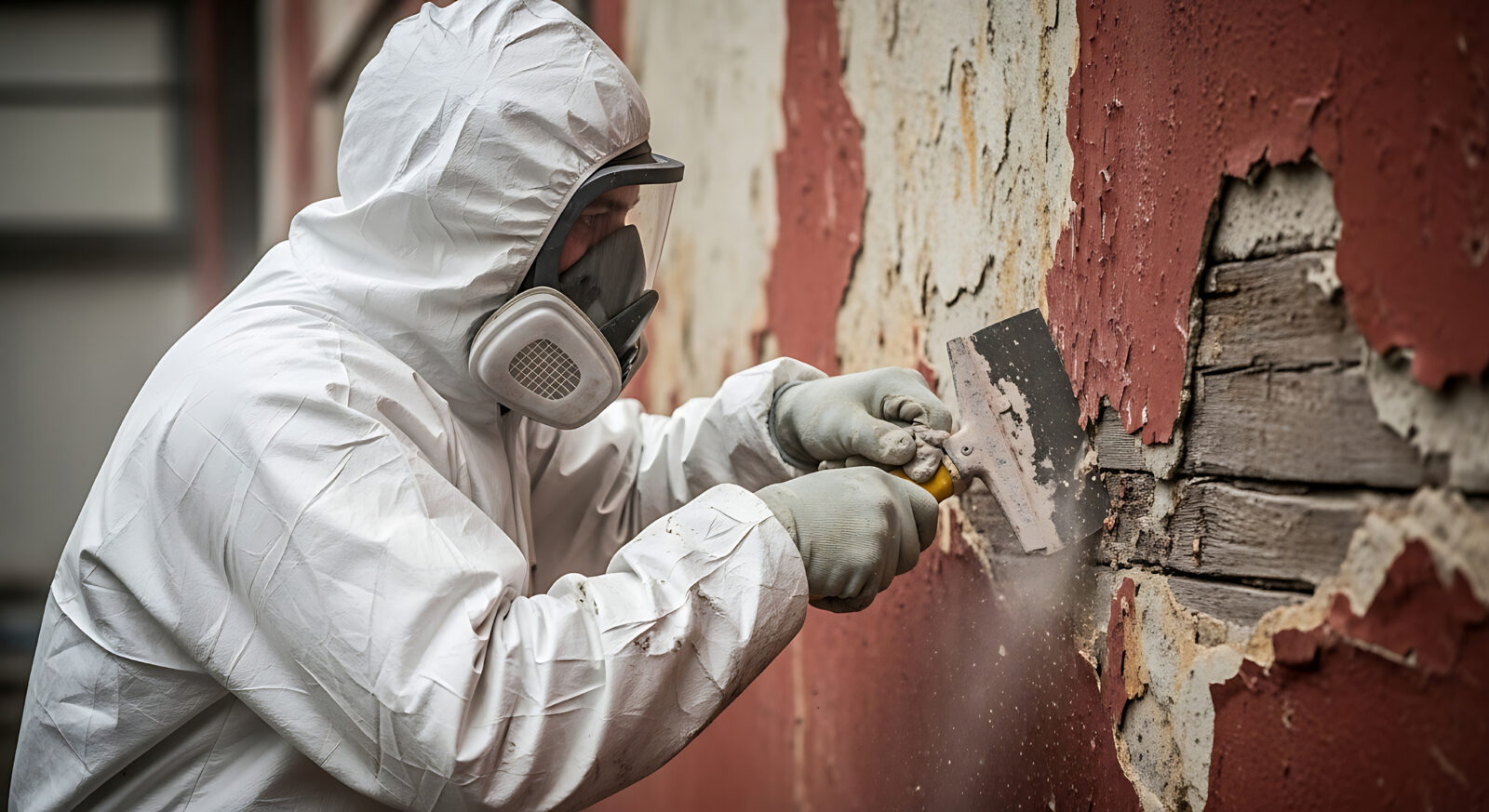
Welcome to peak July in the Midwest! With the sun shining and kids playing in the yard, summer is the perfect time for home upgrades. However, tackling older siding paint projects may bring hidden dangers. Therefore, safe exterior lead paint removal is crucial to protect your family and property.
Why Is Exterior Lead Paint Removal Dangerous?
Old lead-based paint remains one of the most significant source of lead exposure today. Specifically, when this historic coating deteriorates or is improperly removed through dry sanding, it releases microscopic, toxic dust into the air and surrounding environment.
The Hidden Risk of Soil Contamination
Over years of harsh weather, old house paint flakes off and leaches directly into the soil around your foundation. Consequently, bare dirt near older homes can become contaminated.
Step-by-Step Preparation
Below is the method used for exterior siding lead based paint removal:
- Full personal protective equipment including a respirator.
- Place plastic sheeting to catch all falling debris.
- Wet the surface and use manual scraping tool before starting to remove lead based paint.
Summer Yard Safety Checklist
- Test bare soil near your foundation for lead.
- Inspect exterior siding and trim for chipping or peeling paint.
- Hire certified professionals for large-scale abatement projects.
Frequently Asked Questions
Can I power wash lead paint?
No, because high-pressure washing blasts toxic chips across your entire yard and into local storm drains.
How does lead get into my garden?
Flaking exterior paint washes down into the soil during rainstorms, accumulating steadily over decades.
Should I sand or scrape exterior lead paint?
Always use wet scraping methods; dry sanding is highly dangerous and spreads lead dust.
Secure Your Yard Today
Do not risk your summer fun. Rely on SMART Environmental Services for professional testing, thorough abatement aligned with safety standards. Contact us today for a free estimate!